
Malaysian users comparing VPNs want fast connections, fair subscription costs, and useful features. This comparison looks at Kuala Lumpur servers, real-world speed tests, plan prices, device limits, and core security tools so you can decide with confidence before you subscribe.
Surfshark vs ExpressVPN Malaysia: Speed, Subscription Costs & Features

Both services are respected, but they serve different priorities. ExpressVPN focuses on polish and its Lightway protocol, while Surfshark leans on value, unlimited devices, and 12 Kuala Lumpur servers. Knowing which priority matters most to you, whether speed, savings, or simplicity, makes the final choice much easier for readers.
Key Differences at a Glance
Unlimited Devices Versus Fixed Limits
Every plan covers unlimited simultaneous devices, ideal for Malaysian households with phones, laptops, tablets, and smart TVs. ExpressVPN caps connections, with Basic allowing 10 and higher tiers allowing up to 14, which comfortably suits most individuals, couples, and smaller families.
Speed Results Depend on Distance
Independent tests disagree. ExpressVPN often leads in lab results and distance tests thanks to Lightway, while others show Surfshark keeping roughly 90 percent of baseline speed on nearby servers. For Malaysians, a Kuala Lumpur server matters more than small differences.
Security Tools Compared Fairly
Both use strong encryption, kill switches, and RAM-only servers. ExpressVPN highlights automatic obfuscation and a long audit history, while its rival adds Multi Hop, split tunneling, CleanWeb, and NoBorders mode, giving privacy-minded users much more manual control over their connections.
Detailed Comparison for Malaysian Users
Real-World Speed Inside Malaysia Compared
Recent Malaysia tests recorded roughly 120 Mbps on ExpressVPN and 102 Mbps on its rival’s Kuala Lumpur servers, both fast enough for 4K streaming and video calls. Lightway shines on distant servers, while nearby servers feel similar. Results vary by ISP, time, and protocol, so treat benchmarks as guidance and run your own tests on Unifi, Maxis, or CelcomDigi connections.
Kuala Lumpur Server Coverage Compared
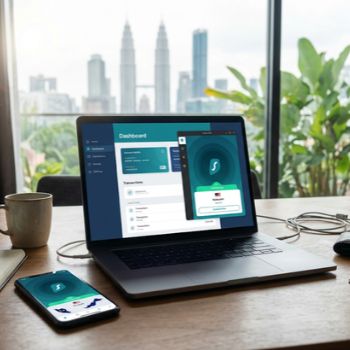
ExpressVPN offers a single Malaysian location, which testers describe as virtual, though it still provides a Malaysian IP address. Its rival runs 12 servers in Kuala Lumpur, which can spread load across more servers. Both let Malaysians abroad appear local, but availability on each local streaming or banking service ultimately depends entirely on that service’s own rules and detection systems.
Subscription Costs Explained Simply
Surfshark’s Starter plan costs from US2.49permonthonthetwo-yearterm,US3.39 on twelve months, and US16.45monthly.ExpressVPNBasicrunsroughlyUS3 to US3.50permonthonlongterms,butitsmonthlyprice,aroundUS13 to US$15, is lower. Both renew higher, so check renewal terms and your local-currency total at checkout. Both include a 30-day money-back guarantee.

Device Limits and Household Value
Device limits quietly affect value. ExpressVPN Basic allows 10 connections, Advanced 12, and Pro 14, which is plenty for one person or a couple. Large Malaysian households with phones, laptops, tablets, consoles, and smart TVs can exceed those numbers, making unlimited connections more practical and potentially cheaper than buying separate subscriptions or constantly disconnecting devices to stay safely within limits.
Privacy Policies and Audit History
Jurisdiction and audits matter. ExpressVPN is based in the British Virgin Islands and reports a long list of independent audits, while its rival is Netherlands-based and cites Deloitte no-logs verifications in 2023 and 2025 plus a Cure53 server audit. Both use RAM-only servers, so check each audit report and privacy policy before trusting any no-logs promise, however polished the marketing.

Streaming, Banking, and Everyday Use
For streaming Malaysian services, banking abroad, and gaming, both unblock most popular platforms, though no VPN can guarantee access to every service. ExpressVPN is praised for streaming consistency and simple apps, while its rival adds flexible controls such as split tunneling and Multi Hop. Test your own must-have apps during the money-back window before committing to any long subscription term.
Which Service Suits Which User
Choose for Budget and Households
Pick the unlimited-device option if you want the lowest long-term price, a big household covered by one account, and extras like Multi Hop and CleanWeb. It suits students, families, and remote workers who juggle many devices nearly every single day.
Choose for Speed and Simplicity
Choose ExpressVPN if you value consistent speeds on distant servers, automatic obfuscation, polished one-click apps, and a long audit record, and you only need up to 10 to 14 devices. Month-to-month plans also usually cost noticeably less than the alternative.
Test Both Before Committing Fully
Both include a 30-day money-back guarantee, so subscribe to one, test Kuala Lumpur speeds, banking apps, and streaming, then request a refund within 30 days if it disappoints. Repeat with the other service and keep whichever performs better for you.
Final Verdict for Malaysian Users
For Malaysian users comparing these two VPNs, the better choice depends on priorities rather than hype. ExpressVPN delivers polished apps, strong audit history, automatic obfuscation, and often excellent long-distance speeds, though it limits simultaneous connections and costs more over long terms. Surfshark counters with unlimited devices, 12 Kuala Lumpur servers, rich privacy features such as Multi Hop and split tunneling, and lower long-term pricing, while still delivering fast local speeds. Because independent tests vary, compare real results on your own Unifi, Maxis, or CelcomDigi connection. Use the 30-day money-back guarantees to test both, verify current prices in your local currency at checkout, and choose the service that protects your online privacy, fits your budget, and runs smoothly every single day.